

eDiscovery Planning: Your ESI Protocol Checklist
This checklist is your ESI protocol playbook — use it as a template to set the foundation for smooth discovery.

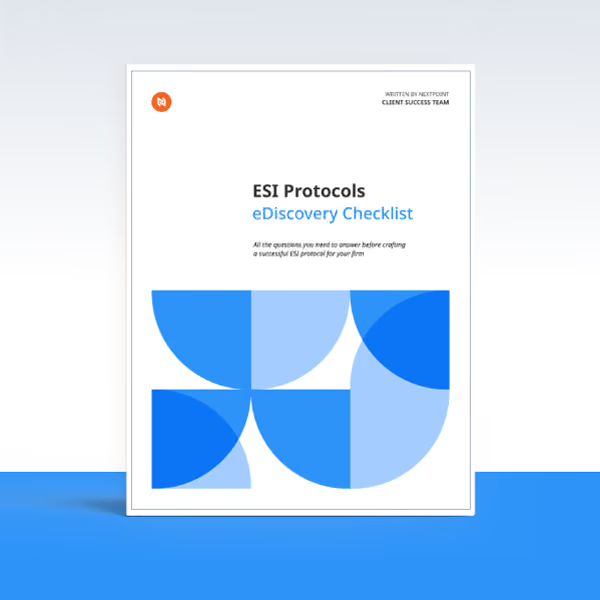
Establishing an ESI protocol might seem daunting at first, but answering a few simple questions at the outset of your case will help you stay on top of complicated ediscovery matters. This checklist lays out the questions that will guide you to a strong ESI protocol.
What are ESI protocols?
ESI stands for Electronically Stored Information, or the digital evidence that dominates most modern litigation. Your ESI protocol will map out your plan for handling this digital evidence. It will cover how you will collect and filter data, deduplicate documents, produce evidence, manage privilege logs, and more. It will become your discovery blueprint for the case – you’ll go back to it time and time again.
With strong ESI protocols, you’ll show up to your Meet and Confer knowing exactly what you need from opposing counsel. These clear requests will prevent road bumps later on in discovery.
What are the benefits of a standardized ESI protocol?
Here are five key advantages that lawyers gain through developing a protocol:
- You’ll think through discovery for the entire matter.
- A well-drafted protocol will protect your client’s data and their interests.
- You’ll identify sources of data that require additional consideration and planning for collection and production.
- You can leverage the protocol for third-party data.
- It’s your discovery blueprint for the case and you’ll go back to it time and time again.
Your ESI playbook: Questions to build an ESI protocol
- Do you currently have an ESI protocol template in-house?
- What type of case are you involved in currently?
- What type of productions have you delivered/received in the past, outside of your current matter?
- What type of venue will the proceedings be held in?
- What type of firm(s) is your Opposing Counsel? (e.g. Mid/Large/Solo)
- Where will the majority of your data be collected from?
- Is there any proprietary software at issue?
- Will there be any hard-copy paper documents to collect?
- What type of metadata do you anticipate being most crucial during your review? (i.e. When v. Where v. Who)
- Will any culling/filtering method be applicable in your case?
- How do you want privilege and/or your privilege log handled?
- How do you want deduplication handled? (i.e. Universal v. Isolated Source)
- What are your production delivery methods and goals?
Download the full ESI protocol checklist
Download the full ESI protocol checklist for more details around the key questions that will help you build out your ESI protocol template.
Join our Nextpoint newsletter list
Related Resources
Blog

Blog
Discover how ediscovery metadata can make or break a case, with iPhone photos, timestamps, and GPS data serving as verifiable evidence.

Blog

Blog
Learn why mobile ediscovery collection requires more than a camera roll, and what defensible collection actually looks like in 2026.
Blog

Blog
What happened at Legalweek 2025? Doug Austin from eDiscovery Today shares insights on AI’s impact, legal tech shifts, and top discovery...
Experience Nextpoint for yourself
Learn how our transparent pricing and powerful platform help legal teams streamline litigation from discovery to decision.