

A Best Practices Guide for Managing eDiscovery Collections
Free ediscovery collections guide: tips for identifying data sources, considerations when choosing an ediscovery data collection method & more.


Are you directing your ediscovery collections with maximum efficiency and speed?
Data collection can be the most complex and technically rigorous of all ediscovery phases. It involves the extraction of potentially relevant electronically stored information (ESI) from its native source into a separate, secure repository for review.
The collection process should be comprehensive without being over-inclusive. It should preserve the integrity of the data, the chain of custody and authenticity of the documents. It should also be time- and cost-efficient, with minimal disruption to the organization’s business operations.
Because the collection process is data-centric, many think of it as an IT activity. However, there’s a great deal of strategy that goes into data collection, demanding both legal and technological acumens. Therefore, it is vital for firms to assemble cross-functional, collaborative collection teams to ensure there is a properly executed collection strategy.
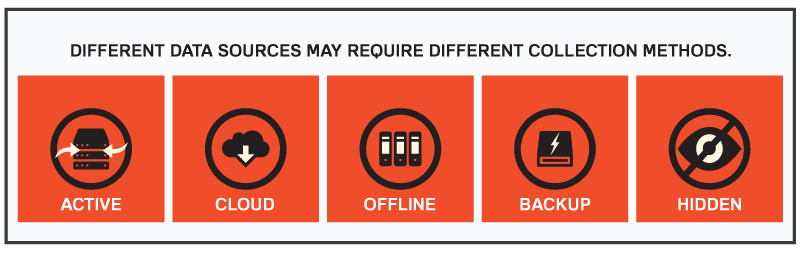
Devising a Collection Strategy
Your collection strategy should be unique to each matter. Before tackling the “how” of data collection, it’s best to discuss the “why.”
Do you know why are you collecting certain data from certain sources? Why collect data via one method instead of another? These are important considerations when building out a collection strategy.
In some cases, it may be wise to collect data immediately—high stakes litigation involving precarious data sources as an example. In other matters, immediate collection may not be necessary, especially if you have a strong preservation process in place. It’s common to collect highly relevant data early, but collecting broadly in the early days of a matter is usually not advisable. This can quickly and needlessly drive up discovery costs.
Other considerations that should influence your collection strategy include whether or not outside experts should be involved, if there is any sensitive data that warrants greater protection measures, and whether any employees might have incentive to alter or delete relevant data. In such cases, a more proactive collection may be warranted.
Ready to Unlock the Secret to Success?

The Client Success and Data Strategy teams at Nextpoint have jointly composed a best practices guide for those undertaking ediscovery data collection. It contains tips for identifying potential data sources, important considerations when choosing a collection method, and more ways to help you be proactive in the initial stage of your ediscovery matter. Click below to download our 11-page ediscovery collections guide.
Join our Nextpoint newsletter list
Related Resources
Blog

Blog
Learn why mobile ediscovery collection requires more than a camera roll, and what defensible collection actually looks like in 2026.

Blog

Blog
A conversation with Mary Mack and Holley Robinson of EDRM
Blog

Blog
Learn how to navigate the unique challenges of construction data collection in ediscovery, from unique file types to numerous custodians.
Experience Nextpoint for yourself
Learn how our transparent pricing and powerful platform help legal teams streamline litigation from discovery to decision.