




Brett Burney, Nextpoint’s eLaw Evangelist, shares his reflection on Legalweek 2026, complete with five key takeaways he learned from the conference this year.
An air of trepidation hovered around the attendees of Law.com’s Legalweek 2026 Conference, thanks to a big change in scenery: The conference moved to the massive Javits Center this year, leaving behind the familiar Midtown location it occupied for 35+ years. But the facility was fresh, welcoming, and walker-friendly, even if the surrounding neighborhood was a disheveled, concrete-laden exercise in construction-navigating frustration.
Here’s a short video Law.com recorded of me excited about the Javits Center.
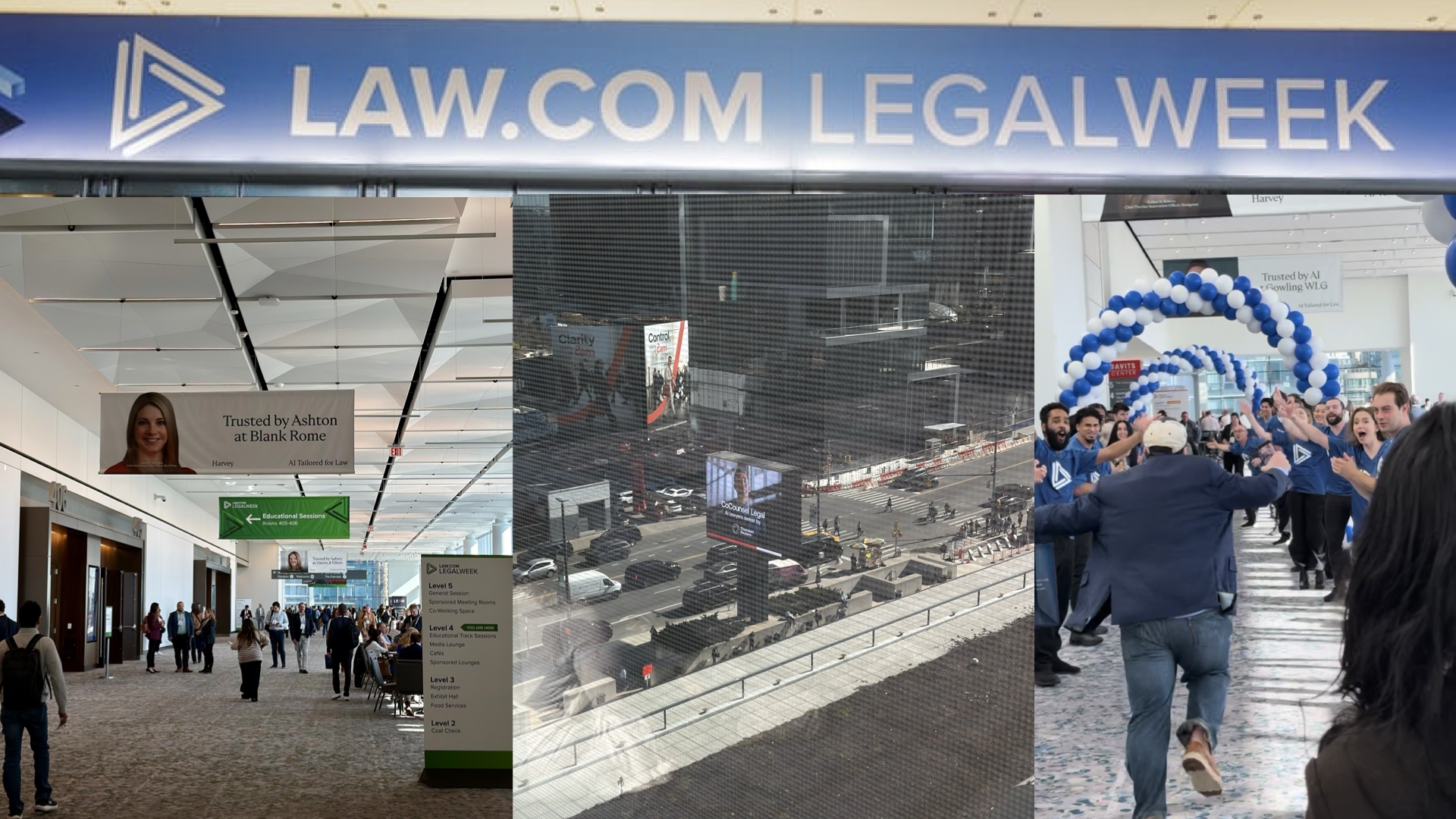
By the middle of day one, I felt a tangible buzz in the air. But I couldn’t tell if I was sensing the energy of a new location, or a ripple effect from the non-stop onslaught of AI — it was at every corner, on every exhibitor sign, and woven into every educational session.

The annual Legalweek Leaders in Tech Awards kicked off the week as usual. I want to say a special congratulations to Mary Mack and Shannon Bales on their well-deserved Lifetime Achievement Awards. Mary Mack is the CEO of EDRM, and I currently serve as a Trustee of the EDRM 2.0 Project with Shannon Bales, who is the Litigation Support Senior Manager at Munger, Tolles and Olson.
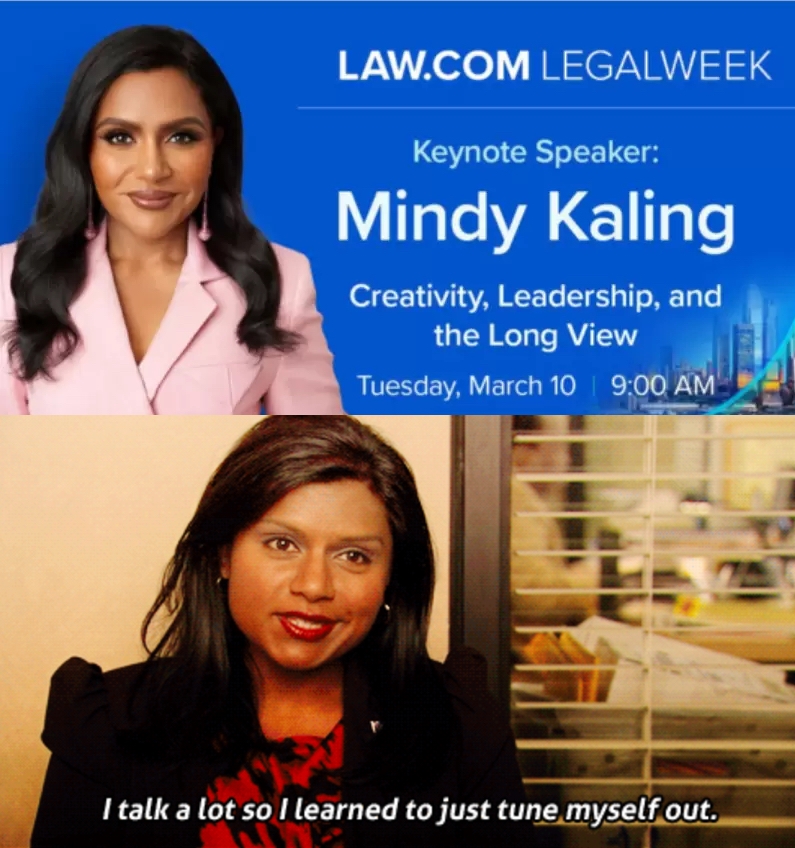
Tuesday morning began with a keynote starring Mindy Kaling in conversation with Gina Passarella, Chief Content Officer of Law.com. Ms. Kaling kept it real, highlighting the room service pancakes she enjoyed before the conference (but with much more brevity than her character in The Office!). She started off with an excellent punchline:
“Lawyers are the only people that can say the word ‘respectfully’ and then proceed to say the most disrespectful thing.”
In addition to the humor we all expected, Ms. Kaling may have shared the most sobering and practical statement about AI from the entire conference: “You won’t get replaced by AI if you’re great at something, but AI will definitely replace mediocrity.” While some may have taken umbrage at this remark, maintaining that not everyone can be “great,” I took it positively: It’s important to ensure you have the right mindset about your contributions in your life and career, which she conveyed throughout the rest of the interview.

“The AI Escape Room” session offered a fun theme, complete with padlocks in envelopes on the tables, along with insightful perspectives on utilizing AI in ediscovery projects. First, the speakers discussed why some litigators are still so hesitant to embrace AI tools in discovery. Philip Weldon observed that “keywords give us the illusion of precision,” and until litigators can get comfortable with other methods, we will be stuck with those longstanding search terms. Even though, as Philip said, “human language is semantically and lexically ambiguous.”
Lastly, when pressed on how to get litigators on board with the AI-volution, Philip left a tongue-in-cheek remark:
“We don’t need attorneys to build the airplane — we just need them to know enough not to open the door at 30,000 feet.”
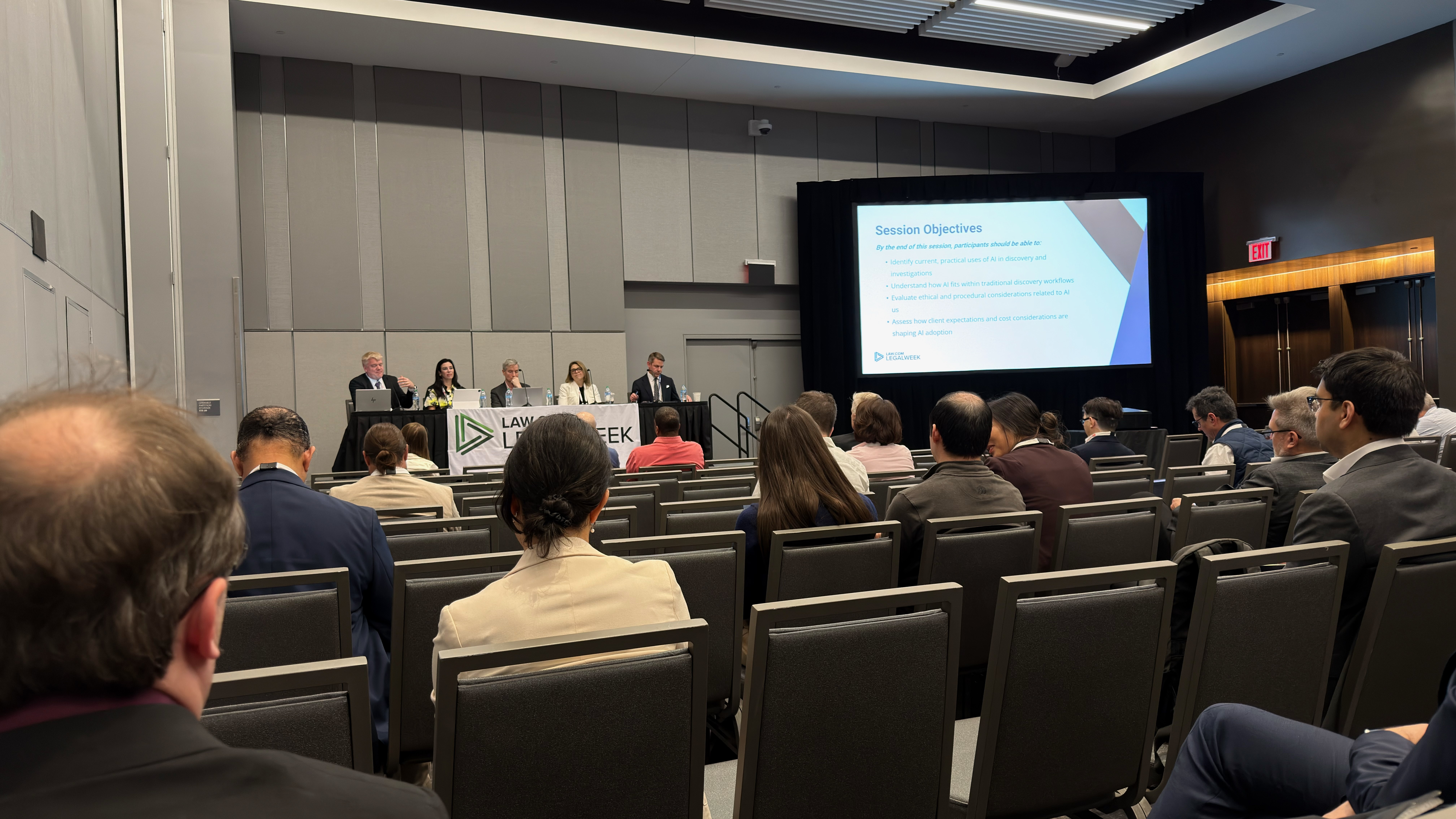
On a similar panel called “Beyond the Hype: Practical Use, Procedural Risk and Client Expectations using AI in Discovery,” Jeffrey Kopczynski from O’Melveny noted that the AI tools they’re using for discovery, legal research, and a myriad of other tasks are doing what he calls “commoditized” work. “What used to take associates 4 hours to complete a task is now down to 20 minutes,” he said. He stopped short of explaining how that affects a billable quota for associates, but did mention that in all the firm does with AI, “the hardest part is drafting the right prompt.”
Another panelist, Robert Keeling from Redgrave, admitted that “key doc review is enormously inefficient, but it’s what we’re used to doing. But with GenAI, we’re typically getting much better results than typical key doc review.” Robert stated that when discussing different review tools and technologies with clients, it still comes down to managing expectations. This has always been an important aspect of implementing new technology in a legal practice, but it’s especially important with AI, which has dominated both the legal tech spotlight and mainstream headlines, leaving clients clamoring to know how their lawyers are using it.

While the move to the Javits Center may have felt like a different world, we still made sure to enjoy some classic New York City activities. I attended the “Hudson River Hustle” 5K with Ari Kaplan, sponsored by Level Legal, followed by NYC bagels at Russ & Daughters sponsored by Page Vault. The 5K used to take place in Central Park, but the riverfront offered a peaceful change of scenery. There was a little morning sweat, some delicious bagels, and excellent networking across the board.
I was anxious to see the session “AI in the Courtroom: A Mock Argument on Generative AI for Document Review,” which was presided over by Judge Andrew Peck, who is no stranger to exploring new technologies from a judicial purview. (Judge Peck wrote the notable Da Silva More opinion on predictive coding several years ago).

Elizabeth “Liz” Marie Gary from Morgan Lewis & Bockius LLP represented the mock defendant, arguing that the AI prompts that her team used to review produced documents were more like work product, and thus not discoverable by the other side. Michelle Newcomer from Kessler Topaz Meltzer & Check, LLP represented the mock plaintiff and argued that the AI prompts were not much different than search keywords that have typically always been exchanged and negotiated between parties.
Ultimately, Judge Peck sided with the defendant, stating that AI prompts are not the same as keywords. Judge Peck further explained that the natural language prompts, and the multiple iterations of those prompts, are more akin to the “workflow training” that attorneys provide to their review teams. It was a fascinating discussion that previewed how these considerations will likely play out in a near-future matter.
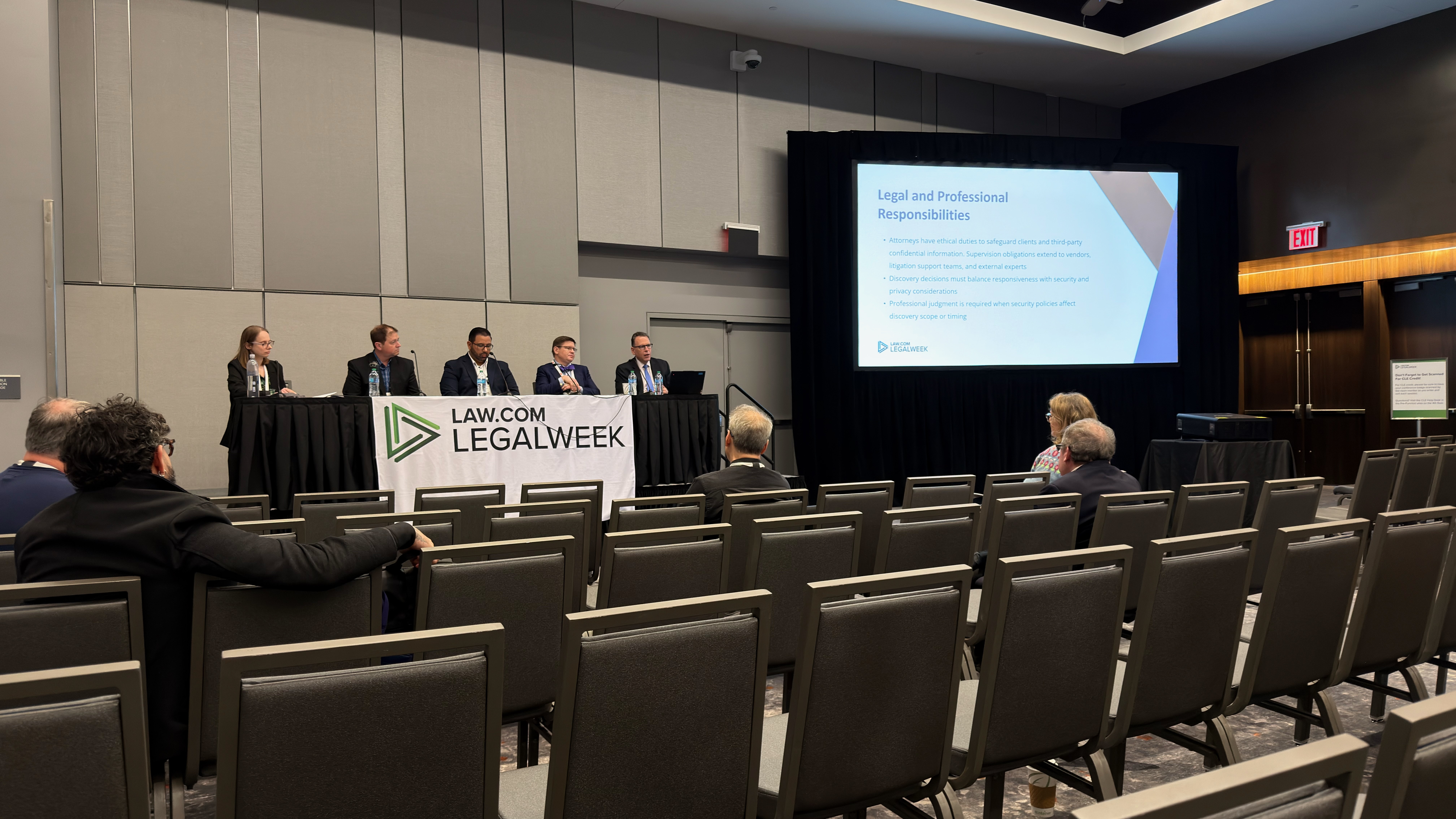
For the very last panel of the conference, I was keen to hear “Locked Down & Litigated: Security Hardening Meets eDiscovery Reality,” and it did not disappoint. It was eye-opening to hear warnings from actual practitioners about how the bar could be doing more to protect sensitive and confidential data involved in discovery workflows. The entire panel agreed that discovery is one of the highest-risk environments for sensitive legal data. That risk can arise when various counsel download or print multiple copies of documents, from a lack of legal professional oversight in training reviewers, and in countless other situations.
David Kessler of Norton Rose Fulbright shared thought-provoking scenarios where he feels highly skeptical of opposing parties and how they protect the sensitive data that he produces to them. This apprehension is often magnified by the fact that many protective orders don’t go deep enough to address data security or impose ramifications for missteps.
My top 5 takeaways
1. AI is everywhere, all the time
As I mentioned, AI dominated the conference this year, as it has for the past few years. But this time, it almost felt like the AI buzz left little room for other topics — and there is far more to legal tech in 2026 than the AI boom.
Still, there were valuable discussions that indicated a shift in the AI landscape: In previous years, the AI hype felt abstract; now, the conversations focused on practical guidance driven by tangible benefits from increasingly common applications of AI.
Keynote speaker Mindy Kaling said it best when she posited that AI will “replace mediocrity.” AI won’t displace attorneys, but legal professionals who know how to use AI will have an edge over those reluctant to embrace change. Luckily, if you’re here reading this, you already have an edge.
2. eDiscovery still matters!
AI may have been the star of the show, but classic ediscovery topics like data security were still a highlight for me. Before the conference, I joined Doug Austin of eDiscovery Today in a Key Discovery Points video to discuss his annual word cloud aggregating Legalweek language. We noted a drop in “ediscovery” mentions in the agenda from last year, and of course, a huge uptick in the prevalence of AI.
But ediscovery themes and experts were integrated into many AI discussions. I believe the lessons we’ve learned through the evolution of the ediscovery industry will be key to ensuring the legal field adopts AI responsibly, ethically, and effectively.
3. The old standards don’t apply
The mock courtroom presided over by Judge Peck was one of the most illuminating sessions, since it offered a glimpse into how courts might approach real AI questions looming around the corner. The takeaway? Old standards don’t apply in the same way, and elements of AI won’t always neatly map out to the workflows used in the past.
4. A new location = new fun
While many Legalweek veterans may have missed our old stomping grounds, I was excited to see the conference move to a location that could accommodate its growth. As a legal technologist and long-time ediscovery nerd, embracing change is just the name of the game.
5. Conference season is just beginning in the legal tech world!
With Legalweek under our belt, legal tech conference season is officially in full swing. ABA TECHSHOW, where I serve as co-chair of the planning board, is coming up March 25th-28th in Chicago. Nextpoint will be exhibiting at booth #2059, and I’ll be there with my team, handing out swag like our eDiscovery for the Rest of Us and AI for the Rest of Us books. I’m also presenting the “60 in 60” session with Patrick Wright of The Wright Firm, sharing 60 tips, tools and tricks to give you an edge in legal tech.
Come say hello to me and the Nextpoint team at ABA TECHSHOW!
I’m confident there are multiple perspectives about this year’s Legalweek Conference, but personally, I returned home encouraged by the new location and informed from the sessions and multiple vendor announcements. I’m a little bleary-eyed from the non-stop AI blitz, but ChatGPT told me it’s just going to continue to proliferate… Well, here’s to next year!