

Navigating the AI Revolution in Legal Practice: Essential Insights for Modern Practitioners
Learn how AI for legal discovery is evolving with case law insights and expert analysis from Doug Austin of eDiscovery Today and Brett Burney of Nextpoint.

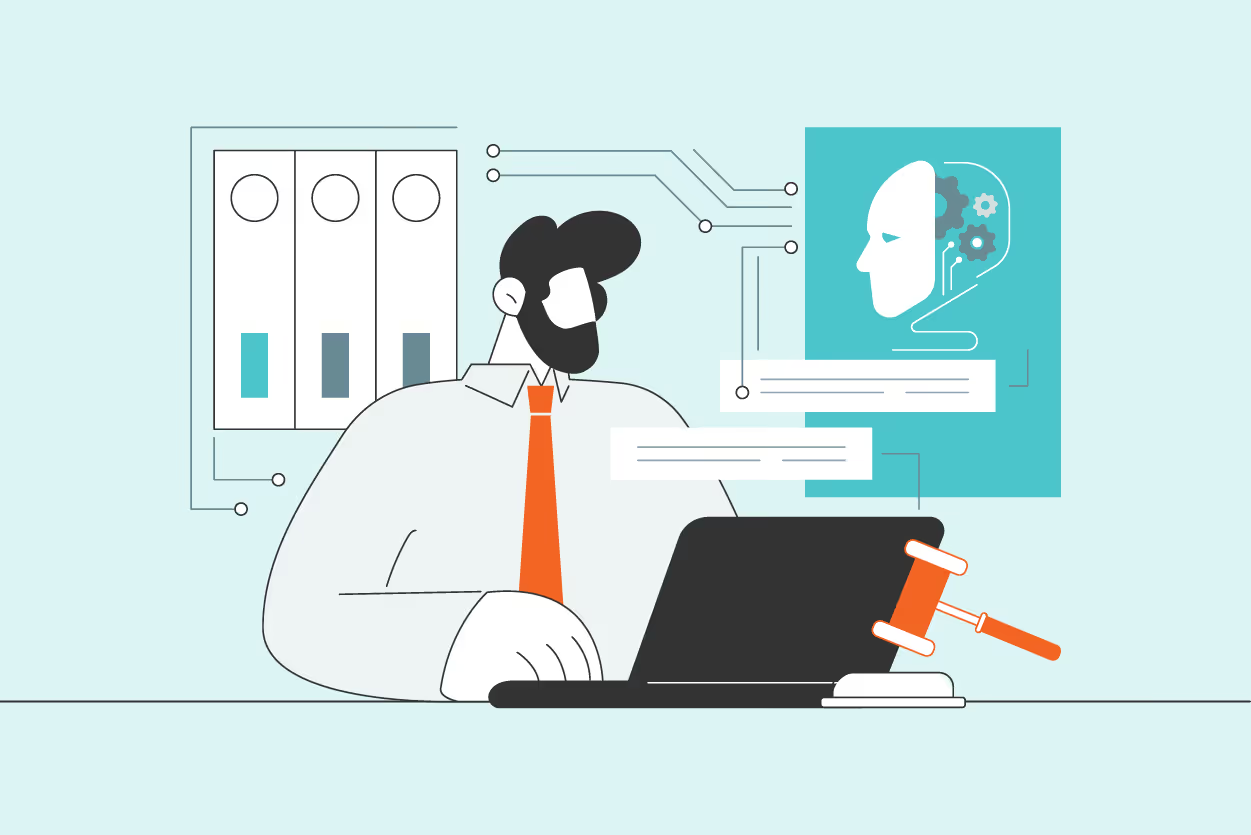
Artificial intelligence is rewriting the rules of legal practice. In our Key Discovery Points video series, Brett Burney and Doug Austin unpack recent case law, court rulings, and real-world examples to reveal what lawyers need to know when bringing AI in legal practice into the courtroom and beyond.
AI’s New Era in Law
Artificial intelligence has stormed into the legal world, and it’s not going anywhere. What seemed like a distant possibility just a few years ago has become commonplace in law firms across the country. Lawyers are using AI to review documents, draft briefs, and build case strategies. But this rapid adoption comes with real risks.
Legal experts Brett Burney of Nextpoint and Doug Austin of eDiscovery Today have been tracking these changes through their Key Discovery Points video series. They’ve analyzed recent cases, court rulings, and practical applications to help lawyers understand what works – and what doesn’t – when it comes to AI in legal practice.
Here are six essential lessons every lawyer needs to know about AI today.
1. No Need to Be Leery About AI
Many lawyers avoid AI because they don’t understand it. That caution makes sense, as the stakes in the legal field are too high for careless experimentation. Craig Ball’s The Leery Lawyer’s Guide to AI addresses this directly, offering a roadmap for cautious but strategic AI adoption. This guide recognizes that skepticism about AI isn’t paranoia – it’s professionalism.
Brett and Doug explore how tools like ChatGPT can handle practical legal tasks: drafting ESI protocols, crafting jury instructions, building case chronologies. The key insight is that AI works best as a collaborative tool, not a replacement for legal expertise. When used thoughtfully, these technologies enhance efficiency while maintaining the quality and accuracy that legal practice demands.
Start small, test carefully, and always verify output. But don’t let fear keep you from exploring tools that could make you more effective.
2. Don’t Rush in as an AI Fool
The legal profession typically adopts new technology slowly. But generative AI has created an unusual rush to adoption. Lawyers are embracing these tools without fully understanding their limitations. The enthusiasm makes sense – everyone wants to work smarter and faster. But rushing in without understanding the risks is asking for trouble.
We’re seeing the consequences play out in real time. Lawyers are getting sanctioned for submitting briefs with fabricated cases. Others are facing embarrassment and damaged reputations because they trusted AI output without verifying it first.
Brett and Doug examine these cautionary tales to show what happens when excitement overrides caution. The lawyers who succeed with AI will be the ones who take time to understand what they’re working with before they start depending on it.
3. Even AI Experts Can Get Faked Out
Even those who should know better can fall victim to AI’s limitations. In a striking example of irony, Jeff Hancock, Stanford communication professor and AI expert, submitted a court declaration containing fake case citations generated by ChatGPT-4o. What was Judge Provinzino’s ruling? Knowing about AI doesn’t excuse sloppy use of it.
This case prompts a critical point: AI-generated content always needs verification. It doesn’t matter how sophisticated the tool is or how experienced you are with AI. If you submit it to a court, you’re responsible for ensuring its credibility and accuracy.
4. A Judicial Approach to Handling AI-Generated Evidence
While lawyers figure out how to use AI, judges are dealing with their own AI challenges. Deepfake videos, synthetic audio, AI-generated documents – courts are seeing evidence that didn’t exist five years. How do you authenticate something that was never real to begin with?
Legal scholars like Maura Grossman and retired Judge Paul Grimm are working on frameworks to help courts handle synthetic evidence. They’re looking at rule changes, authentication standards, and practical guidance for judges and lawyers.
Brett and Doug dig into these developing approaches because understanding how courts will handle AI evidence is crucial for any lawyer who might encounter it. The rules are still being written, but the cases are happening now. Stay informed about how this landscape is evolving.
5. Detecting AI is Difficult and Tricky
If AI-generated content is a problem, the logical solution seems simple: Use tools to detect it. Unfortunately, it’s not that straightforward. Brett and Doug tested ZeroGPT, one of the leading AI detection tools, and the results were mixed at best.
Sometimes it caught AI-generated text. Sometimes it missed it completely. Sometimes it flagged human writing as AI-generated. The technology for detecting AI simply isn’t reliable enough to bet your case on it. This limitation has big implications for AI in legal practice. If we can’t depend on detection tools, we need different strategies for verification. We need to think more carefully about authentication and develop better processes for confirming the source and accuracy of content.
6. A Gentle Distinction for Agentic AI
Just when lawyers are getting comfortable with tools like ChatGPT, the next wave is already approaching. It’s called agentic AI, and it’s different from what we’re using now.
Current AI tools respond to prompts – you ask, they answer. Agentic AI can take independent actions based on parameters you set. Instead of just helping you write a brief, it might automatically review discovery requests, flag potential issues, and suggest responses.
Brett and Doug explain why this distinction matters. Understanding the difference between reactive and proactive AI will help lawyers prepare for tools that don’t just assist with tasks but actually perform them.
This technology is still developing, but it’s coming faster than most people expect. Getting familiar with these concepts now will put you ahead of the curve.
Stay Informed with Nextpoint
The AI revolution in legal practice is just beginning, and staying informed is essential for success. Join Brett Burney and Doug Austin for Key Discovery Points as they continue to decode the latest developments in AI and legal technology. Subscribe to our YouTube channel for regular insights that will help you navigate the future of legal practice with confidence.
Join our Nextpoint newsletter list
Related Resources
Blog
.avif)
Blog
What the ethics opinions say about using generative AI responsibly, and why attorney judgment still comes first

Blog
Blog
What happened at Legalweek 2025? Doug Austin from eDiscovery Today shares insights on AI’s impact, legal tech shifts, and top discovery...
Blog
Blog
This excerpt from AI for the Rest of Us shares practical advice for implementing legal AI in your practice, from costs to security and more.
Experience Nextpoint for yourself
Learn how our transparent pricing and powerful platform help legal teams streamline litigation from discovery to decision.